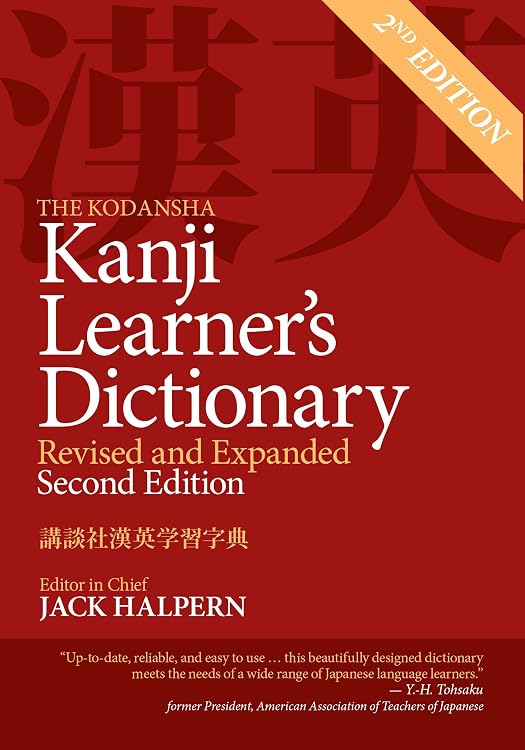
The Kodansha Kanji Learner's Dictionary, Revised & Expanded, 2nd Edition
The Kodansha Kanji Learner's Dictionary, Revised & Expanded, 2nd Edition is an English-language reference for looking up Japanese kanji. The listing says it covers 3,002 characters and provides meanings, readings, stroke order and compound usage, making it a substantial desk reference for learners who want several kinds of information in one volume.
At a glance
- The listing says the revised edition includes 772 more characters than the first edition.
- The stated 3,002-character coverage is paired with meanings, readings, stroke order and compound usage.
Reference price: €44.77
Price checked: 12 Nov 2026
View offerAhead of Black FridayExplore the selectionOften bought together

Pros and cons
Pros
- Combines several practical kinds of kanji reference information in one volume.
- The listing describes radical and pattern indexes, and customer feedback specifically praises their ease of use.
Technical specifications
11 specifications| Characters covered | 3,002 |
|---|---|
| Information provided | meanings, readings, stroke order, and usage in compounds |
| Publisher | Kodansha America, Inc |
| Publication date | 22 March 2022 |
| Edition description | Bilingual |
| Language | English |
| Print length | 1248 pages |
| ISBN-10 | 1568366256 |
| ISBN-13 | 978-1568366258 |
| Weight listed | 936 g |
|---|---|
| Dimensions | 5.12 x 1.69 x 7.17 inches |
Who is it for?
A good fit for
- Japanese learners who want a printed kanji reference with readings, meanings, stroke order and compound examples.
- Readers who prefer English-language reference material and can accommodate a 1,248-page book.
Less suited to
- Anyone looking for a short introductory workbook or a digital dictionary.
Customer reviews on Amazon
- 5 stars
87% 87% - 4 stars
8% 8% - 3 stars
3% 3% - 2 stars
0% 0% - 1 star
2% 2%
Customer feedback describes the book as an informative reference for kanji study, with particular praise for its content and the ease of using the radical and pattern indexes. The aggregate ratings are largely at the high end, though a small share are low. These impressions may matter to learners who expect frequent lookup, but they do not establish how well the book will suit an individual's study method.
Positive themes
- Customers describe the content as informative and useful for learning.
- Feedback specifically praises the ease of use of the radical and pattern indexes.
Frequently asked questions
How many characters does this edition cover?
The listing says it contains 3,002 characters, 772 more than the first edition.
What information does the dictionary provide for kanji?
The listing describes meanings, readings, stroke order and usage in compounds.
What language is the book in?
The product details list English as the language and describe the edition as bilingual.